


A slot catalogue can present hundreds of covers, themes and provider names. Choosing from thumbnails alone is difficult because the cover does not tell you how a game forms a win, what one spin costs or which controls are active. A title that looks familiar may use a different paytable from a game you have used before.
This checklist is for comparing individual slot titles, not for predicting which one will pay next. If you want the detailed meaning of RTP and volatility, read our Thai slots explainer. Here, the task is more practical: open a specific game, read its rules, test its interface and decide whether its pace and cost make sense for you.
1. Confirm the exact game and provider
Start with the title displayed inside the game, not only the name on the catalogue card. Games can have sequels, regional editions, reskins or similarly named variants. Check the provider shown on the loading screen or information panel and make sure the artwork and title match the entry you selected.
This matters when you read a review or a promotional condition elsewhere. An article about one version may describe features that another version does not have. If you cannot find the exact title and provider, avoid assuming that a general provider description applies to this game.
The ChokD99 slots section is a starting point for browsing the category. Treat its catalogue as navigation; use the rules inside the particular game as the source for how that game operates.
2. Check the cost of one complete spin
Look at the total bet shown beside the spin button. Some interfaces also display a coin value, a bet multiplier or a number of lines. These are not always the same as the final cost of one spin. Change one control at a time and watch how the total bet changes before starting a paid round.
If the game includes a “buy feature,” “ante” or similar option, check whether turning it on changes the cost or rules for each spin. A one-tap control can make a meaningful difference. If an autoplay setting is available, inspect the number of rounds, stop conditions and stake it will use. Do not assume it stops when your planned session budget is reached unless you have confirmed that setting.
For a simple spending example, a 5-baht spin repeated 40 times represents 200 baht in total stakes, regardless of the results of those rounds. The example is arithmetic, not a suggested stake. Thinking in total rounds and total cost can make the interface easier to evaluate than looking only at a small per-spin figure.
3. Read how winning combinations are formed
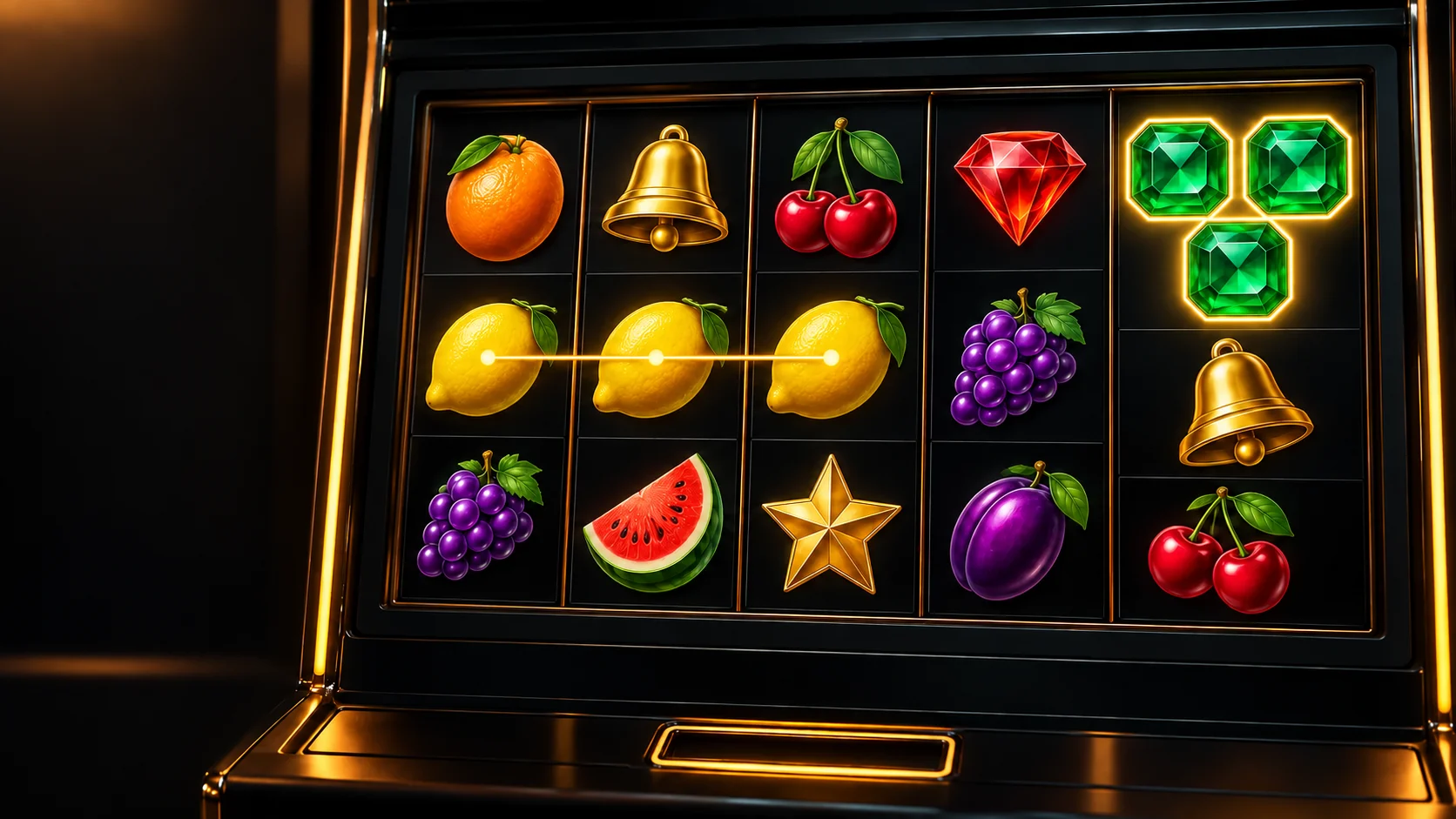
Open the paytable or help screen. Does the game use fixed paylines, ways to win, clusters or a different pattern? Are combinations counted left to right, on adjacent reels or anywhere on the grid? Does a special symbol substitute for other symbols, award a separate amount or trigger another feature?
Do not rely on general terms such as “five reels” or “bonus symbol.” A five-reel game can still have a very different structure from another five-reel game. The paytable should show symbol values and explain any conditions for a feature. If the screen has several help pages, read through them rather than stopping at the first diagram.
Also check whether the displayed payout is expressed as a multiple of the total bet, the line bet or a coin value. Confusing those units can make a paytable appear more generous than it is. The game’s own explanation should resolve the unit used.
4. Understand optional features before using them
Free-spin rounds, expanding symbols, cascading reels and multipliers may sound similar across titles but can work differently. Read what triggers the feature, how many rounds it provides, whether the stake is fixed during it and what ends it. If a feature can be purchased directly, identify its exact price and terms before pressing the button.
Do not infer how often a feature will appear from a short demonstration or a few screenshots. A visually busy game can have long stretches without the feature you noticed in an advertisement. Feature explanations tell you the rules; they do not promise a frequency or a result for your session.
If the rules are incomplete or ambiguous, choose a simpler title or ask support where the full rules can be found. You should not have to guess whether a control changes the amount being staked.
5. Use RTP and volatility as descriptions, not forecasts
Some games publish a return-to-player figure. It is a theoretical, long-run measure under specified conditions, not a refund rate for your next 20 or 100 spins. Some titles may offer different settings or versions, so check the information for the exact version available to you rather than a number quoted in an unrelated review.
Volatility describes how returns may be distributed. A description such as “high volatility” is not a guarantee of a large payout, nor does “low volatility” mean a session cannot lose money. These labels can help you understand the kind of variation a game is designed around, but they cannot identify a “due” spin.
Previous rounds do not make a later independent spin more likely to win. If you find yourself increasing stakes because the game “must pay soon,” step away from the session. A selection method should rest on clear rules, cost and usability, not a pattern imagined from recent results.
6. Test the game on your actual device
Open the information panel, change the bet and return to the main screen on the device you intend to use. On a phone, check whether the total stake remains visible, whether the spin and feature buttons are distinct, and whether the paytable can be read without repeated zooming. In landscape mode, make sure no important control is cut off.
The same title can feel different on desktop and mobile because a smaller screen changes where the controls are placed. If a connection drops, learn how to find a round in game history and how to contact support with the round identifier. That is more useful than assuming a frozen animation reveals whether a round has settled.
If a demo or information-only view is offered, use it to learn the controls. Do not treat a short demo result as evidence of how a paid session will turn out. Its useful purpose is orientation: finding the rules and understanding the interface.
7. Keep promotion rules separate from game rules
A slot may be available in the catalogue but excluded from a specific offer. A promotion might count some games differently, impose a maximum stake or expire before you finish its conditions. Read the current promotion page and the terms for the particular offer if you intend to use it.
The game’s paytable explains the game. The offer’s terms explain the offer. Neither should be used as a substitute for the other. If a rule is unclear, ask support about the named game and the named promotion together, then keep the answer.
8. Set limits before the first round
Decide your time and spending boundaries in advance. A game with a convenient repeat button makes it easy to lose track of both. Keep track of the total amount spent across titles; changing providers or themes does not reset the session’s cost. If you reach the limit you set, stop rather than increasing the stake to recover a loss.
ChokD99 describes available account restrictions on its responsible gaming page. Read that page if you need a deposit limit, a break or further help. A game that encourages you to ignore your planned boundary is not a good fit for that session.
A short decision checklist
Before choosing a Thailand slot game, make sure you can answer six questions: What is the exact title and provider? What does one full spin cost? How does the paytable form a win? What do optional controls change? Can you read and use the interface on your device? Does the game fit the time and spending limit you set? If you are comparing the websites that host those titles, use our site comparison method for that separate decision.
If one answer is missing, find it before continuing. Themes, animation and popularity may make a title appealing, but the rules and controls determine what you are actually using. A practical choice is the game you can understand and operate deliberately, with no expectation that a particular result is owed to you.