

Slot games can look simple: choose a stake, start a spin and see the result. Behind that familiar action, however, different titles use different rules. Their symbols, paylines, bonus features, stake options and mathematical designs can change how the game feels.
If you are browsing Thai slots or comparing slot games available on a Thailand-focused casino site, the most useful place to begin is the game information screen. It explains the particular title you are viewing. This guide covers the main terms so you can read that information with more confidence.
What counts as a slot game?
A slot game has reels or a similar symbol-based layout that produces outcomes according to its rules. Some games resemble traditional three-reel machines. Others have five reels, expanding symbols, changing layouts or bonus rounds with their own rules.
The theme does not determine the underlying game design. Two titles with similar artwork may have different stake ranges or ways of forming a winning combination. Likewise, two games from the same provider may behave differently. Treat each title as a separate game and read its rules before using money.
On a typical game screen, you may see a stake selector, a paytable, a help button and a history or settings menu. The exact controls vary. If a control or symbol is unclear, the paytable or information panel should be your first reference.
RTP: what the percentage means
RTP stands for return to player. It is a theoretical measure of the proportion of total stakes a game is designed to return as prizes over a very large number of plays. Suppose a game lists a theoretical RTP of 96%. That does not mean a person who spends 100 baht will receive 96 baht back. A short session can end with a much higher return, a much lower return or no return at all.
RTP is best understood as a feature of the game’s long-run design. It is not a prediction for the next spin and cannot tell you when a payout will happen. Two people using the same title may have very different experiences over a few minutes or hours.
When comparing games, check the RTP shown in the rules for the specific version available to you. Do not rely on an old article, a screenshot from another site or a general statement about the provider. If a figure is not shown or you cannot identify which version it applies to, do not invent one.
A higher theoretical RTP also does not remove the risk of loss. It describes an average across a large amount of play, while your own results will vary.
Volatility: how results may be distributed
Volatility, sometimes called variance, describes how uneven a slot’s results may feel. A game described as lower volatility may tend to award smaller prizes more often. A higher-volatility game may have longer stretches without a notable payout while allowing for less frequent, larger prizes. These are broad descriptions of a game’s design, not guarantees about your session.
A “high-volatility” label does not mean a big payout is due after a run of losing spins. Each outcome follows the game’s rules; previous losses do not create a debt that the game must repay. If the provider does not publish a volatility rating, be careful about treating an unofficial rating as established fact.
RTP and volatility answer different questions. RTP describes a long-run theoretical return. Volatility concerns how results can vary along the way. Neither gives a reliable forecast for an individual player.
Paylines, ways to win and symbol rules
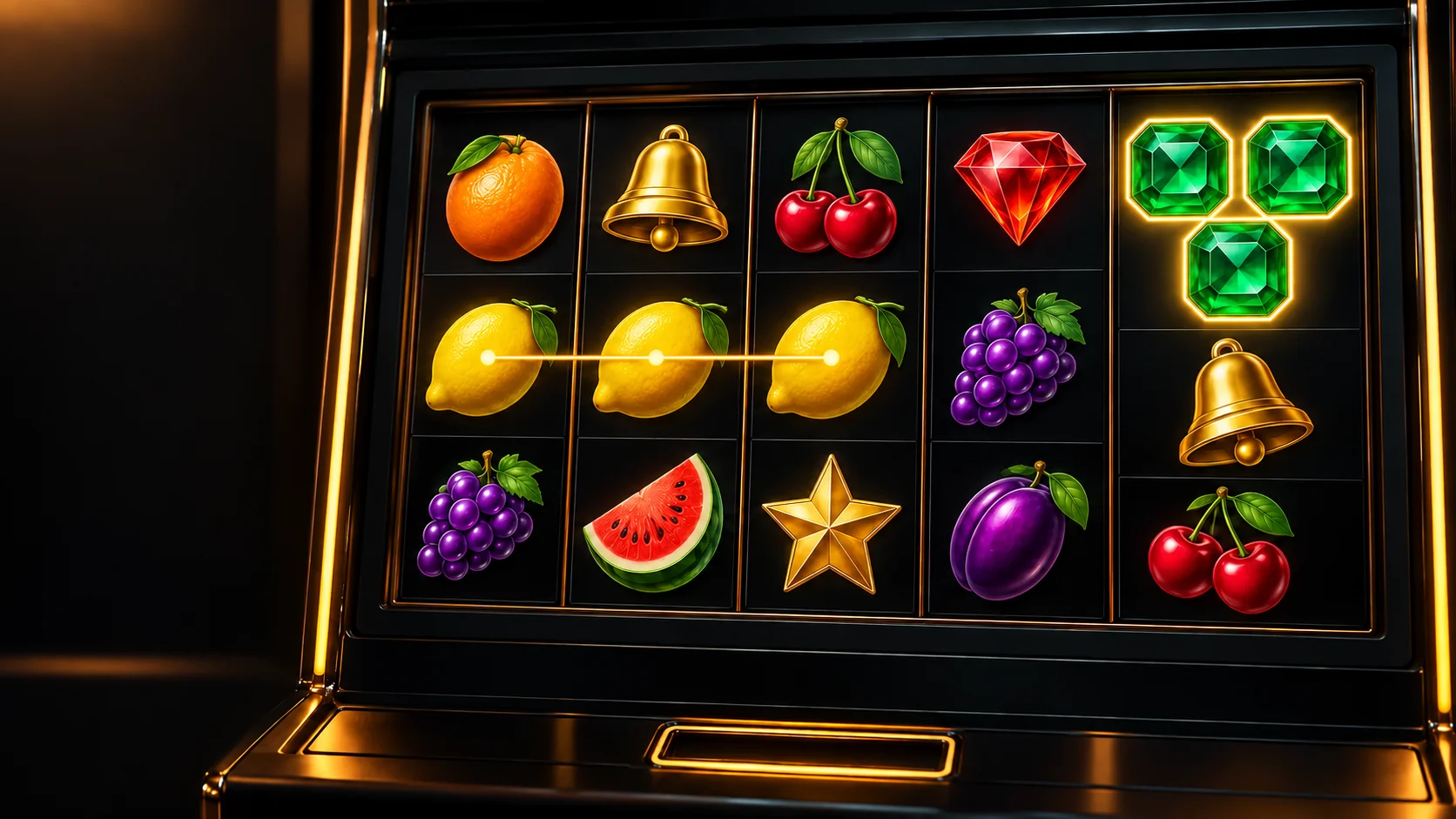
Traditional slot descriptions often refer to paylines: specified paths across the reels on which matching symbols can form a winning combination. Other games use “ways to win” or different matching systems. The number of lines or ways is a rule about possible combinations; it does not by itself tell you how likely you are to profit.
Read the paytable to see which symbols have values and how combinations are counted. Some games pay only from the leftmost reel. Others may have different rules. A winning symbol appearing on the screen does not necessarily produce a payout unless it meets the game’s stated combination requirements.
Wild symbols commonly substitute for certain other symbols, but their exact function varies. Scatter symbols may trigger a feature regardless of a particular payline, yet that too depends on the title. There is no universal rule that applies to every game named “slot.”
Bonus rounds and free spins
A bonus round is a feature activated under conditions stated in the game rules. It might involve free spins, a separate selection screen, changing symbols or a different reel layout. The presence of a bonus feature does not say how frequently it will occur or what a particular activation will pay.
Read whether the feature uses the stake that triggered it, whether multipliers apply and how prizes are calculated. If a game offers a feature purchase, look carefully at its cost and rules. Paying to enter a feature does not guarantee that the resulting prize will exceed the purchase price.
Do not confuse an in-game free spins feature with promotional free spins offered by a website. An in-game feature is part of the slot’s design. A website promotion may have separate eligibility, wagering or expiry conditions. Check both sets of rules when they apply.
Progressive jackpots and other special features
Some slots include a progressive jackpot, whose displayed amount may increase as eligible play occurs. Others use a fixed jackpot or a prize feature that simply carries a jackpot-style name. The label alone does not explain how a prize is funded or awarded.
If a jackpot matters to your choice, find the eligibility conditions. Check the required stake, eligible game version and rules for triggering the prize. A large number on a banner is incomplete information without those details.
Similarly, terms such as “multiplier,” “respin” and “expanding reel” describe features, but their effect depends on the rules of the individual title. A multiplier may apply to one symbol combination, a bonus round or another defined event. Read what it multiplies before drawing conclusions from the name.
Choose a stake you understand
A stake selector may show a value per spin, a coin denomination or another unit used by the game. Confirm the total cost of one spin before starting. A change in settings can make the cost different from what you expected.
Also check any automatic play option. Repeating a spin without manually pressing the button each time can make it harder to notice how quickly a session is moving. If you use such a feature, understand its stop settings and watch your spending.
It can help to decide on a maximum affordable amount before opening the game. Once that amount is reached, stop. Increasing the stake to recover a loss does not change what the previous spins produced and may increase the amount at risk.
Does a “slot strategy” change the odds?
You may find articles that claim a time of day, a pattern of spins or a sequence of stake changes can reveal when a slot is “ready to pay.” Those claims should be treated with caution. A run of outcomes on your screen is not proof that the next spin will follow a predictable pattern.
Learning the rules can help you avoid misunderstandings. It can tell you the cost of a spin, what triggers a feature and how a prize is calculated. It does not provide a way to guarantee a profitable session.
Be equally careful with short videos of large payouts. They show selected results, not the full range of outcomes or the total amount spent before the clip began.
A practical way to compare two Thai slot games
Open the information panel for each title and compare the same set of details:
- Total stake per spin: Are you comfortable with the available range?
- Pay rules: How do symbols form a prize?
- Published RTP: Is a figure shown for the version you can access?
- Volatility information: Does the provider publish it, and how is it described?
- Bonus rules: What triggers each feature, and what are its conditions?
- Device experience: Can you read the rules and controls on your screen?
This approach gives you something more reliable than choosing from a title, theme or claim that a game is “hot.” If you cannot find or understand a rule, ask for clarification before spending money.
The key point
Thai slots differ in presentation and in their underlying rules. RTP, volatility, paylines and bonus features help describe a game, but none can promise a result for your next session. Read the information for the exact title and version you are considering, understand the cost of each spin and keep spending within a limit you can afford to lose. Browse the slot category to find a title, then check its own rules. For a broader assessment of the website, use our online casino site checklist.