


A live dealer casino combines a real-time video stream with a digital betting interface. The dealer, betting timer, account balance and round history are connected, but they do not perform the same function.
Understanding these separate parts helps you determine whether a wager was accepted, which round it belongs to and how the final result was settled.
This guide explains the typical lifecycle of a round for players researching a live dealer casino in Thailand. Exact procedures, limits, decisions and settlement rules vary between providers and tables. Always check the information panel for the specific table before applying rules learned from another game.
What Is an Online Casino Live Dealer Game?
An online casino live dealer game broadcasts a physical table or studio to your computer or mobile device. A human dealer conducts the procedure while the digital interface allows you to select and submit wagers.
Depending on the provider, live casino formats can include:
- Baccarat
- Roulette
- Blackjack
- Sic bo
- Dragon Tiger
- Game-show-style tables
Although the dealer appears through a video stream, the wager is normally recorded through the digital interface. This distinction is important: seeing the dealer begin a round does not prove that your selection was successfully accepted.
Understanding the Live Dealer Screen
A typical live dealer screen contains several components.
Video stream
The video shows the table, dealer and physical procedure. It may also show cards, a roulette wheel, dice or other equipment.
Betting interface
This is where you choose a position and enter the amount you want to stake. The interface should show the total committed amount before betting closes.
Betting timer
The countdown indicates how much time remains to submit or change eligible selections. It does not necessarily indicate video delay or the exact status of a transaction.
Result panel
This section presents the completed table result. It may also highlight which positions won.
Round history
The history records previous results or transactions. Depending on the platform, it may show a round number, timestamp, accepted stake, return and settlement status.
A clear video stream does not confirm that a wager was accepted. Likewise, a short video interruption does not automatically mean that the underlying round stopped.
Stage 1: The Betting Window Opens
At the beginning of a live dealer round, the interface opens an action window. Eligible betting positions become available, and a countdown normally shows how much time remains.
Before entering a wager, check:
- The game and table name
- The account currency
- Minimum and maximum limits
- The chip denomination
- The selected position
- Any side-wager rules
- The total amount committed
Some interfaces allow a wager to be changed or removed before the deadline. Others may use an additional confirmation step.
Do not assume that placing a chip on the screen completes the transaction. Look for a visual or recorded indication that the wager was accepted.
Check the combined stake
A main selection and several side selections can add up to considerably more than the value of one chip.
For example, placing 50 units on a main position and 10 units on two separate side positions creates a total stake of 70 units—not 50.
A repeat button may also reproduce every eligible selection from the previous round. Check the copied positions and total amount before the betting window closes.
On a smaller device, important information can become harder to see. Our mobile casino usability guide explains what to check before using a live table on a phone.
Stage 2: The Wager Is Accepted or Rejected
When the countdown reaches its deadline, the game normally stops accepting new selections for that round.
An action submitted close to the deadline may be accepted, rejected or delayed by the interface. What you intended to submit is not necessarily what the system recorded.
Use the following information to establish what happened:
- Accepted-wager confirmation
- Balance movement
- Round identifier
- Transaction history
- Settlement record
If the wager was rejected, a favourable result displayed at the table does not create a payout for that unaccepted selection.
The reverse is also important. A temporarily frozen or unclear screen does not prove that no wager was accepted. Check the transaction record before submitting another selection.
Stage 3: Betting Closes
Once betting closes, new selections should no longer be added to the active round. The dealer or equipment then completes the relevant procedure.
If you click after the deadline, the interface may reject the action or apply it to a later round, depending on the product’s rules. Never assume that an on-screen click belongs to the round currently shown in the video.
The round identifier is more reliable than visual timing when matching a wager with a result.
If anything appears unclear, record:
- The displayed round number
- The approximate time
- The table name
- The amount selected
- Whether the balance changed
- Any confirmation or error message
These details provide a stronger basis for checking the transaction than a general statement that the wager was placed “just before betting closed.”
Stage 4: The Dealer Completes the Procedure
The physical procedure depends on the live casino game.
In roulette, the result comes from the ball and wheel. In a card game, the dealer follows the dealing procedure and any applicable drawing rules. Sic bo uses dice, while other formats may combine studio equipment with digital features.
The live dealer label does not mean that every part of the display performs the same function. A table may combine:
- A live physical event
- Digitally displayed wagers
- Calculated payouts
- Optional side features
- Digitally generated multipliers or enhancements
Check the rules to understand which components determine the primary result and which are additional features.
The UK Gambling Commission provides one regulatory example through its live-dealer technical standard. Within that standard’s scope, live dealer operations must be fair and independently auditable. Its guidance covers documented dealing procedures, staff training, supervision, video surveillance and game logs. genui{“citation”:{“ref”:”turn3view0″}}
This reference does not verify a specific ChokD99 table or prove that the same standard applies to every provider. It illustrates why the video stream and the auditable game record serve different purposes.
Can the Dealer Influence the Next Result?
A dealer’s speed, commentary, gestures or previous rounds should not be treated as a reliable prediction of the next outcome.
For example, several consecutive results on one baccarat position do not prove that the same position will continue or that the opposite position has become due. The displayed history records earlier rounds; it does not control the next result.
This is similar to the issue explained in our guide to independent slot spins and random results. A visible pattern can feel meaningful without becoming a dependable prediction.
Stage 5: Decision Games May Open Another Timer
Some live dealer casino games require an additional player decision after the initial wager has been accepted.
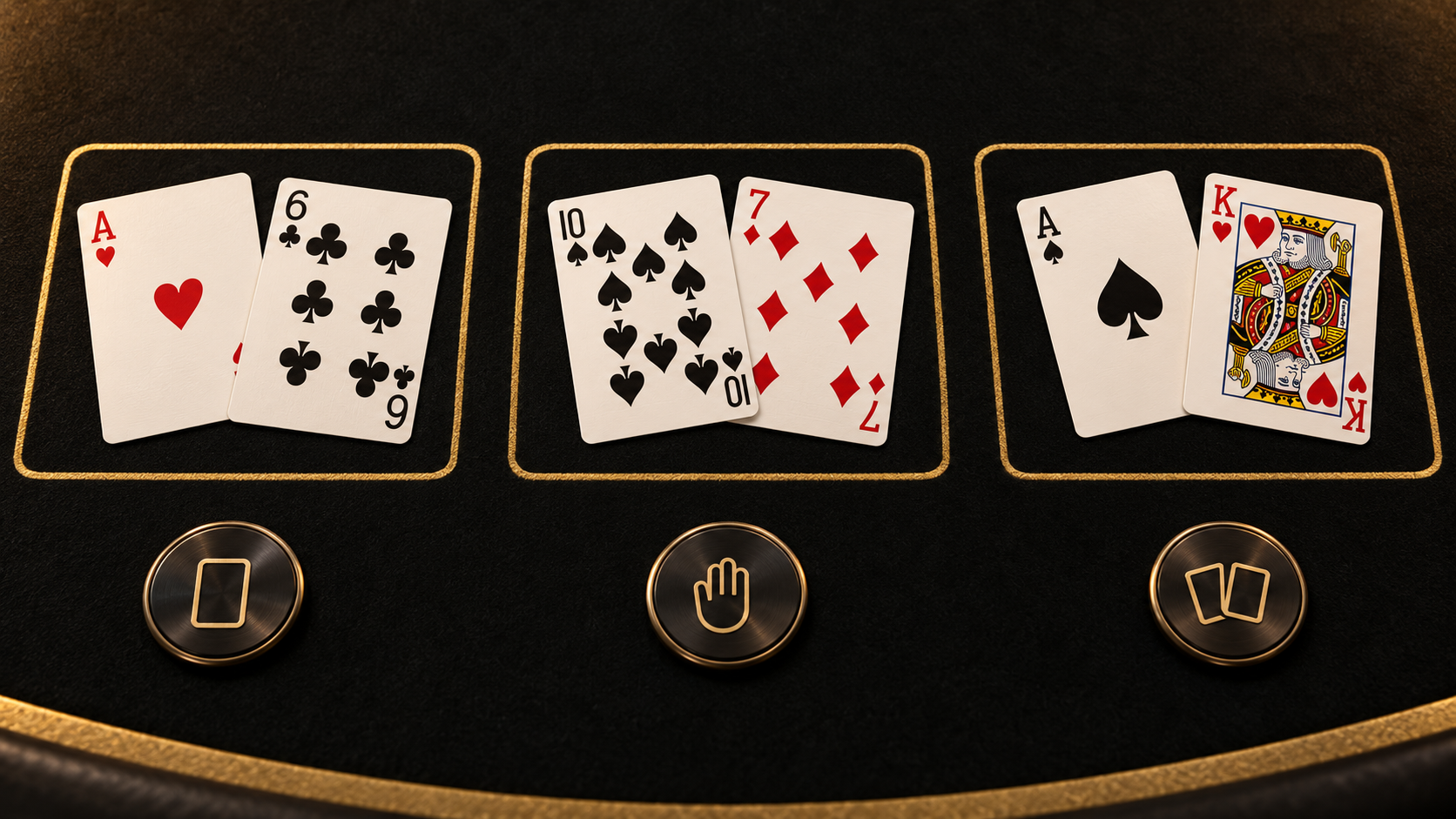
Blackjack is a common example. Depending on the hand and table rules, the available actions may include:
- Hit
- Stand
- Double
- Split
- Insurance
The available options depend on the current hand and the specific table. Not every decision is always permitted.
A second countdown may appear when the player must choose an action. If no action is submitted before time expires, the table may apply a default decision specified in its rules.
Do not assume that every blackjack table uses the same default. A delayed video stream may also not extend the digital decision deadline.
Some decisions require additional stakes
Doubling, splitting or taking another optional position can require more money. A button being available does not mean that using it is free.
Before confirming an action, check:
- Whether an extra stake is required
- How much will be charged
- Which hand or position it affects
- What happens if the timer expires
The countdown should not pressure you into selecting an option you do not understand.
Stage 6: The Game Evaluates the Result
After the physical procedure is complete, the game evaluates every accepted selection according to its own rules.
A main wager and a side wager are separate. One can win while the other loses.
Consider a hypothetical round:
- Main wager: 50 units
- Side wager: 10 units
- Total stake: 60 units
- Side-wager return: 25 units
- Main-wager return: 0 units
The displayed side selection may be highlighted as a win, but the combined financial result is:
25 units returned − 60 units staked = 35-unit net loss
This is why the table’s headline result does not always explain the complete account movement. You must compare every accepted stake with its corresponding return.
Stage 7: The Result Is Settled
After evaluation, the platform applies the result to the relevant balance or transaction record.
The table can display a completed result before every balance panel updates. Depending on the system, you may briefly see a pending transaction.
A pending result is not the same as a completed settlement. Avoid placing several additional wagers simply to test whether the balance is updating. That can make the transaction sequence harder to review.
For each disputed or delayed round, keep these details together:
- Round identifier
- Timestamp
- Table name
- Accepted selections
- Total stake
- Displayed result
- Recorded return
- Current settlement status
If the platform uses separate game and main-account wallets, confirm which balance you are viewing.
What Happens If the Live Stream Freezes?
A frozen video stream does not by itself reveal what happened to the wager.
Several situations are possible:
- The video stopped, but the underlying round continued.
- The wager was accepted before the interruption.
- The wager was rejected before betting closed.
- The result was recorded but has not yet appeared on the screen.
- The transaction remains pending.
- The provider applies an interruption rule.
Do not assume that every disconnection automatically cancels the wager or produces a refund. The correct outcome depends on the point of interruption, the accepted transaction record and the provider’s rules.
What to record after an interruption
Save the following information:
- Round number
- Time of interruption
- Table name
- Selected amount
- Whether betting had closed
- Whether a decision was pending
- History or balance status
- A screenshot of any relevant message
Use a factual description when contacting support. For example:
> The video stopped after betting closed. Round history shows the transaction as pending.
Do not send your password, full payment credentials or one-time verification codes when reporting a live dealer problem.
Does a Winning Table Result Guarantee a Payout?
No. A displayed winning result only produces a return when the player had an eligible wager that was successfully accepted for that round.
A payout can also differ from what a player expects because of:
- Different wager types
- Side-wager conditions
- Commission
- Table-specific payout rules
- Push or tie conditions
- Maximum payout restrictions
- An unaccepted or rejected transaction
Check the exact paytable and accepted-wager record before deciding that a settlement is incorrect.
How to Review a Live Dealer Round
When reviewing a completed or disputed round, ask five questions in order:
- What was selected?
Identify every main and side position.
- What was accepted?
Confirm which selections were recorded before betting closed.
- What was charged?
Check the total reduction from the appropriate balance.
- What result was recorded?
Match the result to the correct round identifier.
- What was returned?
Compare the final credited amount with the applicable payout rules.
If one answer is missing, identify that specific gap in the support request.
“The result looked wrong” provides less useful information than “Round 123 remained pending after the result was displayed and 50 units were charged.”
Live Dealer Casino Checklist
Before using a live dealer casino in Thailand, check whether the table clearly provides:
- Game and table name
- Account currency
- Minimum and maximum stakes
- Main and side-wager rules
- Payout information
- Betting countdown
- Accepted-wager confirmation
- Round history
- Transaction identifiers
- Interruption procedure
- Support access
These checks help you understand and verify a round. They do not remove the financial risk or make future results predictable.
Final Takeaway
A live dealer round has several separate stages: the betting window opens, a selection is submitted, betting closes, the dealer completes the procedure, the result is evaluated and the transaction is settled.
The video stream shows the table, but the accepted-wager and account records determine what was entered and how it affected the balance.
When a round appears unclear, check the round identifier, accepted stake, recorded result and final return. That evidence is more reliable than judging only the dealer’s announcement, the video timing or the previous-results board.