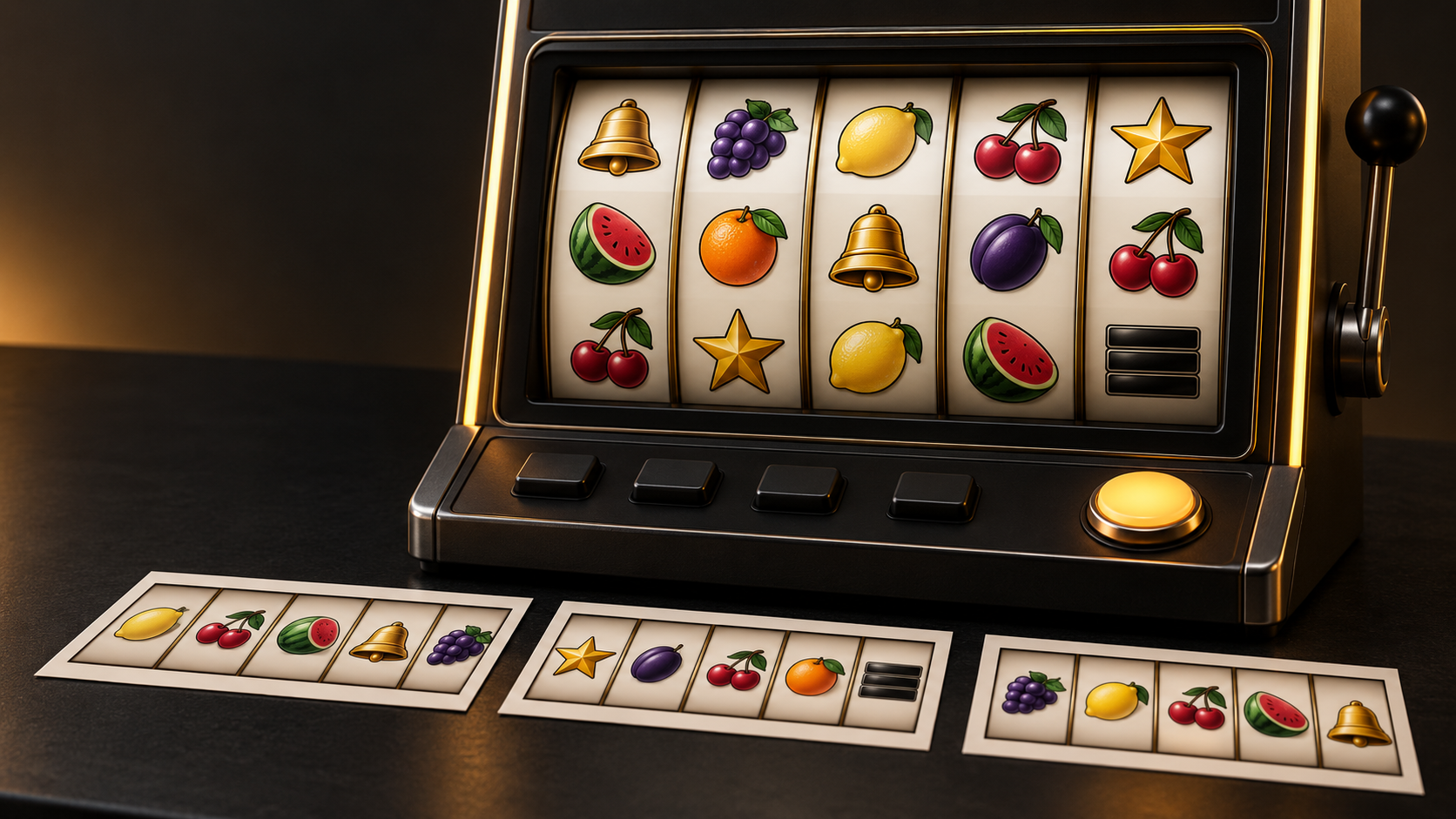



Two slot titles can have similar themes, reels and bonus features but produce very different playing experiences. One may award smaller returns relatively often, while another may go through longer quiet periods before producing a less frequent but potentially larger result.
This difference is commonly described as slot volatility.
Understanding volatility can help you select a slot that better suits your preferred pace, budget and session length. However, volatility does not reveal when a payout will occur, and it cannot be used to predict the outcome of the next spin.
This guide explains how low, medium and high-volatility slots differ, how volatility relates to RTP and hit frequency, and what information you should check before selecting a title.
What Is Slot Volatility?
Slot volatility describes the general pattern and range of results a slot is designed to produce over a very large number of rounds.
It is sometimes called slot variance, although the two terms may be used slightly differently in technical discussions. For everyday slot comparisons, both usually refer to the balance between payout frequency and payout size.
A slot may generally be classified as:
- Low volatility
- Medium volatility
- High volatility
These categories do not guarantee what will happen during an individual session. They describe the intended long-term mathematical behaviour of the slot rather than a fixed sequence of results.
For example, a high-volatility title does not guarantee a large payout if you continue spinning. It only means that its result distribution may be more uneven, with a greater proportion of the theoretical return connected to less frequent outcomes.
Low-Volatility Slots
Low-volatility slots are generally designed to produce smaller returns more frequently.
Their base features may activate regularly, but individual outcomes are often modest compared with the largest possible prize. This can create a steadier session because the balance may change in smaller steps.
A simplified pattern might look like this:
- Several non-winning rounds
- A small return
- Another small return
- A short sequence of modest results
- An occasional medium-sized payout
This example is only an illustration. Actual results remain random and can differ considerably from one session to another.
Low-volatility slots may appeal to users who prefer:
- More frequent on-screen activity
- Smaller changes to their balance
- Longer sessions using a controlled stake
- Simpler base features
- Less dependence on rare bonus outcomes
The main trade-off is that frequent returns do not necessarily mean profitable results. A return can still be smaller than the stake used for that round.
For example, receiving ฿6 after staking ฿10 is recorded as a winning result by the slot, but the balance has still decreased by ฿4.
Medium-Volatility Slots
Medium-volatility slots aim to offer a balance between payout frequency and payout size.
They may include regular smaller returns, occasional feature rounds and some higher-value outcomes. Their balance movement may be less stable than a low-volatility slot but less extreme than a high-volatility title.
A medium-volatility slot may suit users who want:
- A mixture of base-round returns and bonus features
- Moderate balance movement
- A combination of smaller and larger outcomes
- A playing pace between the two extremes
However, “medium volatility” is a broad description rather than a universal technical standard. Two providers may both label a title as medium volatility even though their mathematical models are noticeably different.
You should therefore treat the label as a general guide, not a precise measurement.
High-Volatility Slots
High-volatility slots usually place more of their theoretical return in less frequent and potentially larger outcomes.
These titles may include valuable multipliers, bonus rounds, expanding symbols or other features that are harder to activate. As a result, a session may contain longer periods with limited returns.
A simplified pattern could include:
- A series of non-winning rounds
- Several small returns
- Another quiet period
- A less frequent feature with a larger result
High volatility does not mean that a large payout becomes due after a losing sequence. Every round remains governed by the slot’s rules and random-number system.
High-volatility slots may appeal to users who understand and accept:
- Less frequent returns
- Larger balance movements
- Longer gaps between meaningful features
- A greater possibility of using the session budget quickly
- No guarantee of reaching the advertised major features
The maximum possible payout should not be treated as a typical result. It usually represents an exceptional outcome that may require a specific combination of symbols, multipliers and bonus conditions.
Low vs Medium vs High Slot Volatility
| Volatility level | General payout pattern | Typical balance movement | Main consideration |
|---|---|---|---|
| Low | Smaller returns may occur more frequently | Usually more gradual | Frequent returns may still be lower than the stake |
| Medium | Mix of smaller and occasional larger results | Moderate variation | Classification differs between providers |
| High | Larger results may be less frequent | Wider and faster changes | A session may end before a major feature appears |
These descriptions refer to general design patterns. They cannot determine the result of a particular round or session.
Is Volatility the Same as RTP?
Volatility and RTP describe different parts of a slot’s mathematical model.
Return to Player, or RTP, is the theoretical percentage of total stakes that a slot is designed to return across a very large number of rounds.
Volatility describes how that theoretical return may be distributed.
Two slots can display the same RTP while producing very different experiences.
For example:
- Slot A may distribute more of its theoretical return through frequent smaller outcomes.
- Slot B may distribute more of its theoretical return through less frequent but potentially larger outcomes.
Both could have the same published RTP, but Slot A may feel steadier while Slot B may feel more uneven.
RTP is not a promise that an individual user will recover a particular percentage of their stakes. Short sessions can finish far above or below the theoretical figure.
Is Volatility the Same as Hit Frequency?
No. Hit frequency estimates how often a round produces a result classified as a hit or win by the slot.
It does not show the value of those results.
A slot can have a relatively high hit frequency while still returning many amounts that are lower than the stake. Conversely, a lower hit frequency may be connected to less frequent but larger outcomes.
When hit frequency information is available, it should be considered together with:
- Volatility
- RTP
- Paytable values
- Feature frequency
- Maximum payout
- Minimum and maximum stake
Looking at only one figure can create an incomplete impression of how the slot behaves.
How Can You Check a Slot’s Volatility?
Not every slot displays an official volatility rating. When the information is available, you may find it in:
- The information or help menu
- The paytable
- The provider’s official description
- The rules section
- A volatility meter inside the slot interface
Some providers use written categories such as low, medium or high. Others use a visual scale, rating bars or a numerical score.
If an official rating is unavailable, avoid treating short personal tests as proof of a slot’s volatility. A small number of demo rounds cannot accurately reveal the long-term mathematical model.
Review websites may publish their own classifications, but these should be separated from information supplied directly by the provider.
Can Demo Mode Reveal Slot Volatility?
Demo mode can help you understand a slot’s layout, stake controls, paytable and feature rules. It can also show whether the general pace feels suitable for you.
However, a short demo session cannot confirm the exact volatility.
Random variation can make a high-volatility slot appear active during one session or make a low-volatility slot appear unusually quiet during another. Reliable volatility classifications require access to the slot’s mathematical information or analysis of a very large result sample.
Use demo mode to learn how the slot operates, not to forecast how it will perform with real funds.
Does Increasing the Stake Change Volatility?
In most conventional slots, changing the stake changes the amount risked and the value of potential returns. It does not automatically change the underlying volatility model.
However, some titles contain stake-dependent features. A higher stake may activate additional paylines, improve access to a jackpot level or enable a separate feature. If the rules change with the stake, the available result distribution may also change.
Before adjusting the stake, check:
- Whether every payline remains active
- Whether any features require a minimum stake
- Whether the jackpot rules change
- Whether the displayed maximum payout is based on a different bet setting
- Whether the total stake is shown per line or per round
Never increase the stake because a large result appears to be due. Previous rounds do not create a predictable schedule for future outcomes.
Choosing a Volatility Level
There is no volatility level that is automatically better for every user.
A suitable choice depends on your budget, preferred session length and tolerance for balance fluctuations.
Before starting, consider the following questions:
- How much have you set aside for the entire session?
- What is the total stake per round?
- How many rounds could the budget support if there are few returns?
- Are you comfortable with long periods without activating a major feature?
- Are you selecting the title because of its actual rules or only because of its maximum payout?
If you prefer a steadier pace and smaller balance changes, low volatility may be more suitable. If you accept less frequent returns and wider variation, you may consider medium or high volatility.
The classification should help you choose an appropriate experience—not encourage you to increase your spending.
Common Slot Volatility Misunderstandings
“A high-volatility slot will eventually pay a large amount”
Not necessarily. High volatility indicates a more uneven distribution of results. It does not guarantee that a particular session will reach a large payout.
“A low-volatility slot is safer”
Low volatility may produce smaller balance movements, but every paid round still risks the stake. Frequent small results can hide an overall balance decline.
“The slot has been quiet, so a feature must be close”
A sequence of previous results does not prove that a bonus feature or large payout is due. Slot rounds are designed to be independently determined under the applicable rules.
“A higher RTP always means lower volatility”
RTP and volatility measure different characteristics. A slot can combine a relatively high theoretical RTP with high volatility, or a lower RTP with low volatility.
“The maximum payout shows what I am likely to receive”
The maximum payout is the highest possible result permitted by the rules. It does not represent an average or commonly expected result.
Final Thoughts
Slot volatility helps explain whether a title generally distributes its theoretical returns through frequent smaller outcomes, a mixed pattern or less frequent larger results.
Low-volatility slots usually provide a steadier pace. Medium-volatility slots offer a broader mixture of outcomes, while high-volatility slots may involve longer quiet periods and wider balance changes.
Volatility is useful for comparing slot structures, but it cannot predict the next result. It should always be considered alongside RTP, hit frequency, paytable information, stake requirements and feature rules.
Most importantly, select a stake and session budget before starting. Do not increase spending to chase a bonus feature or recover previous losses, regardless of the slot’s volatility rating.
Frequently Asked Questions
What does volatility mean in slots?
Slot volatility describes the general distribution of results. Low volatility is commonly associated with more frequent smaller returns, while high volatility is associated with less frequent but potentially larger outcomes.
Is high or low slot volatility better?
Neither is universally better. Low volatility may suit users who prefer smaller balance changes, while high volatility may suit those who accept wider fluctuations and less frequent features.
Can slot volatility predict when a payout will happen?
No. Volatility describes a long-term result pattern and cannot identify when a payout or bonus feature will occur.
Can two slots have the same RTP but different volatility?
Yes. Two slots may have the same theoretical RTP while distributing that return differently. One may produce smaller results more frequently, while the other may connect more value to rarer outcomes.
Where can I find a slot’s volatility rating?
Check the slot’s help menu, paytable, rules or official provider description. If no rating is published, third-party classifications should be treated only as estimates.
Does a higher stake reduce slot volatility?
Usually not. Increasing the stake generally changes the amount risked rather than the underlying volatility. Always check whether the title has stake-dependent paylines, jackpots or special features.