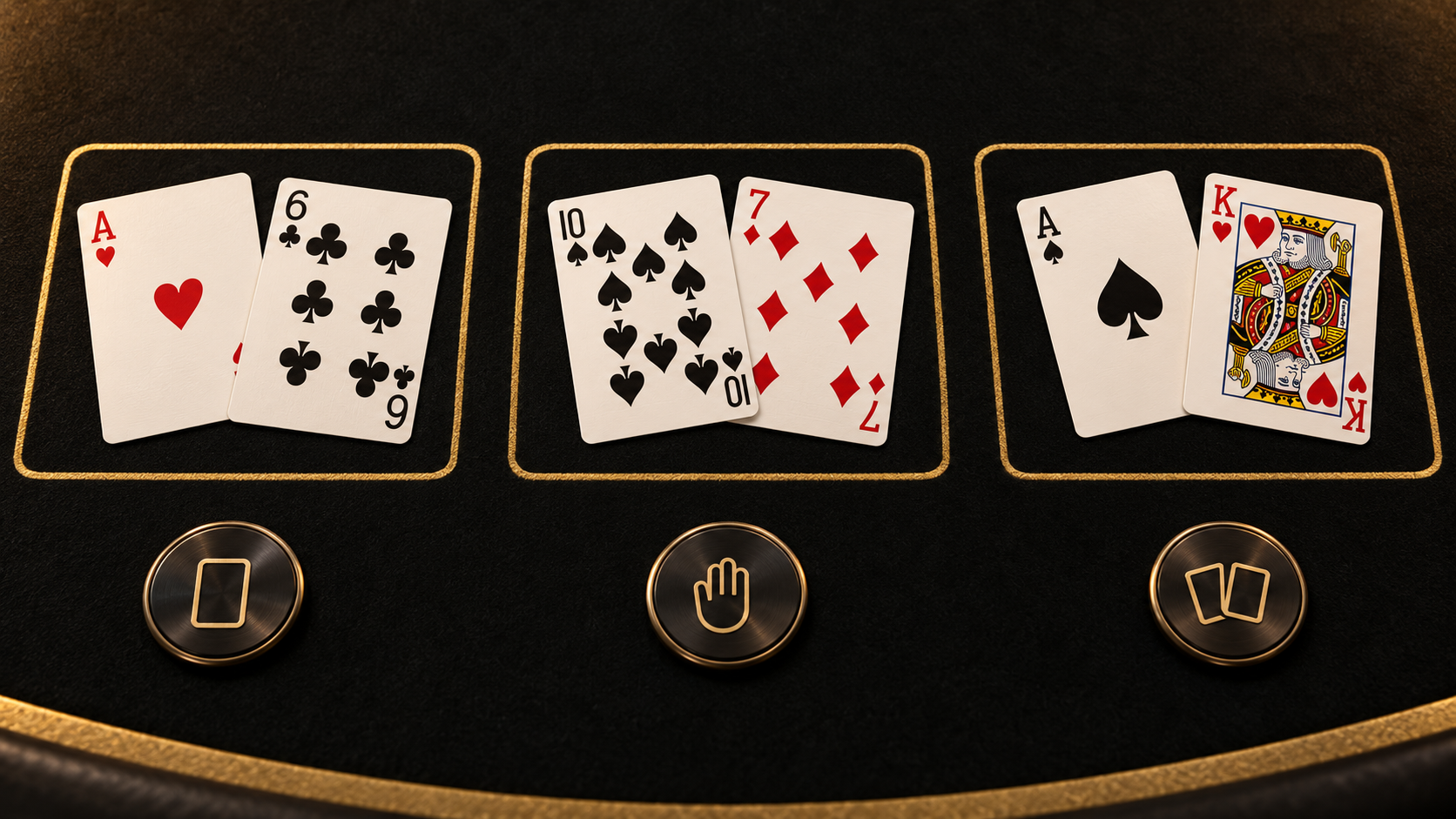


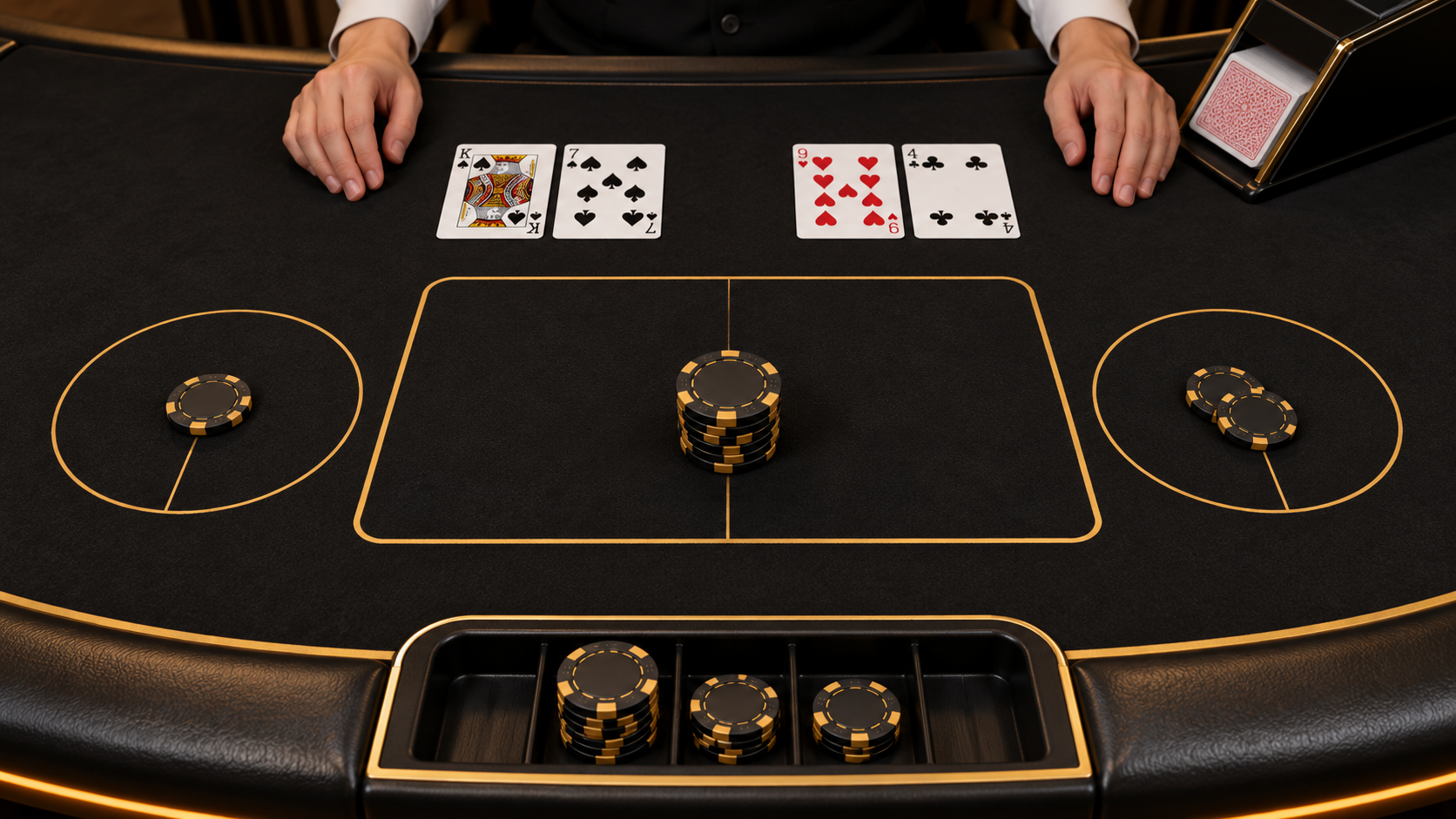
A live casino table displaying a minimum of 20 units and a maximum of 2,000 units may appear straightforward. However, those numbers do not always explain every amount that can be entered during a round.
The displayed range may apply only to the main wager. Side bets, individual positions and additional blackjack decisions can have separate limits. A table may also restrict the maximum total stake or cap the amount paid for a particular result.
This guide explains how to read live casino table limits, calculate the full cost of a round and understand how main and side wagers are settled.
All amounts used below are hypothetical examples. They do not describe current ChokD99 limits or recommend a particular stake. Always use the currency, limits and rules displayed on the selected table.
What Are Live Casino Table Limits?
Live casino table limits define the permitted stake range for a table, wager category or individual position.
The information can include:
- Minimum main wager
- Maximum main wager
- Minimum total stake
- Maximum total stake
- Position-specific limits
- Side-bet minimums and maximums
- Maximum returns or payouts
- Additional-action limits
The headline minimum and maximum are only a starting point. You need to determine exactly what each number applies to.
For example, a table may show a range of 20–2,000 units while limiting one optional side position to 5–100 units. The side-bet maximum remains 100 even though the headline table maximum is 2,000.
Check the Currency Before Reading the Limit
A number has no useful financial meaning until you know its currency or unit.
Live casino interfaces may display values as:
- Account currency
- Product currency
- Credits
- Chips
- Tokens
- Another internal unit
A chip marked “10” might represent 10 baht, 10 credits or another amount determined by a conversion rule.
Before entering any selection, confirm:
- The account currency
- The table currency
- The value of one credit or chip
- Whether a conversion is being applied
- The total amount shown in real currency
A regulatory example is found in the UK Gambling Commission’s transaction-display standard. Within its scope, the system must clearly present the amount being gambled and explain conversions between currencies, credits, chips or tokens. It also calls for the unit stake and total stake to be displayed where appropriate. genui{“citation”:{“ref”:”turn4view0″}}
This reference does not verify a particular table or establish that the same requirements apply to every website. It illustrates the information that should be checked before committing money.
Table Minimum vs Position Minimum
The table minimum may describe the smallest main wager accepted for participation. It does not necessarily apply separately to every position.
Suppose a baccarat table displays a 20-unit minimum. Depending on its rules, that could mean:
- At least 20 units on one main position
- At least 20 units across all eligible main positions
- At least 20 units on every selected position
- At least 20 units on the table, excluding side bets
These interpretations produce different requirements.
A side position may have a lower minimum, but that does not always mean it can be entered without a qualifying main wager. Check whether the side bet is independent or requires another accepted selection.
Table Maximum vs Position Maximum
A displayed maximum can also operate at different levels.
It may restrict:
- A single position
- A wager category
- One hand
- One player position
- The combined round total
- The maximum eligible payout
For example, a roulette table may permit a higher total amount across several selections while maintaining a lower maximum on one straight-up position.
Similarly, a baccarat table may allow different maximums for Player, Banker, Tie and optional side selections.
Do not interpret the largest number on the screen as permission to enter that amount on every available position.
Add Every Selection to Find the Total Stake
The cost of a round is the sum of all accepted selections—not the value of the largest individual chip.
Consider this hypothetical layout:
- Main wager: 40 units
- First side wager: 10 units
- Second side wager: 5 units
The total initial commitment is:
40 + 10 + 5 = 55 units
All three selections may be within their individual limits, but the complete round still costs 55 units.
This becomes particularly important when using repeat or rebet controls. A repeat button may copy the entire previous layout rather than one main selection.
Before confirming a repeated layout, check:
- Every copied position
- The denomination on each position
- The new total stake
- Whether the table limits have changed
- Whether sufficient balance remains
Our guide to how a live dealer casino round works explains how selections move from the betting window to acceptance and settlement.
Additional Decisions Can Increase the Stake
Some live casino rounds require only the opening wager. Others allow later decisions that can increase the amount committed.
Blackjack is the clearest example.
Double down
A permitted double-down decision normally adds another stake under the table’s rules. The exact amount and card procedure can vary.
Split
Splitting an eligible pair normally creates a second hand and requires an additional stake. Further splitting may or may not be permitted.
Insurance
Insurance is a separate wager with its own stake requirement and settlement condition. It should not be treated as a free feature attached to the main hand.
Suppose an opening blackjack wager is 100 units. If the player splits and later doubles one eligible hand, the final amount exposed during the round can be considerably higher than the initial 100 units.
The opening chip therefore does not always represent the maximum possible cost of a decision-based round.
Before entering the first wager, understand:
- Which additional actions are available
- What each action costs
- Whether actions can be repeated
- The highest possible combined stake
- What happens when the action timer expires
What Is a Live Casino Side Bet?
A side bet is a separate selection evaluated according to its own qualifying event.
It may concern:
- The player’s initial cards
- The dealer’s initial cards
- A particular card combination
- A pair
- A result margin
- The number of cards used
- A particular wheel or dice outcome
- Another event defined by the table
The side bet does not necessarily use the same winning condition as the main wager.
For example, a blackjack side wager might be evaluated immediately from the first cards. A later hit could change the outcome of the main hand without changing the already-determined side result.
Always check when the side bet is evaluated:
- Before additional cards
- After the completed hand
- At the final table result
- After a separate digital feature
Similar Side-Bet Names Can Have Different Rules
Two providers may use similar names for side bets while applying different:
- Qualifying combinations
- Card counts
- Payout schedules
- Maximum stakes
- Maximum awards
- Tie rules
- Settlement times
Do not assume that a side bet works identically because you recognise its name.
Use the current table’s information panel and paytable. Rules learned from one provider should not automatically be applied to another.
How to Read Side-Bet Payouts
Payout notation can describe either net winnings or total return. The distinction affects how much reaches the account balance.
“5 to 1”
Under a conventional interpretation, a 5-to-1 payout provides five units of net winnings for every one unit staked. If the original stake is also returned, the total received is six units.
For a 10-unit stake:
- Net winnings: 50 units
- Returned stake: 10 units
- Total return: 60 units
“5 for 1”
This can mean five units are returned in total for every one unit staked.
For a 10-unit stake:
- Total return: 50 units
- Amount representing gain above the stake: 40 units
The difference between the examples is the treatment of the original stake.
However, interfaces do not always use these phrases consistently. The table’s explicit payout definition takes priority.
What does “5×” mean?
A multiplier such as 5× may refer to:
- Five times the stake returned in total
- Five times the stake as net winnings
- A multiplier applied to another calculated value
If the interface does not explain the notation, do not rely on the multiplier alone when calculating the expected balance change.
A Winning Side Bet Can Still Produce a Losing Round
A highlighted side-bet result does not necessarily mean the entire round was profitable.
Consider this hypothetical example:
- Main wager: 100 units
- Side wager: 10 units
- Total stake: 110 units
- Main-wager return: 0 units
- Side-wager total return: 60 units
The net result is:
60 returned − 110 staked = 50-unit loss
The side selection won, but its return did not recover the main wager and total round cost.
This is why a winning animation should not be used alone to judge the financial result.
To calculate the complete result:
- Add all initial stakes.
- Add any later stakes.
- Add all amounts returned.
- Subtract the total stake from the total return.
Avoid Counting the Stake Twice
Some interfaces report total return, while others report profit or net winnings.
Suppose a result panel says that 60 units were returned from a 10-unit wager. If the 60 already includes the original 10-unit stake, subtracting that stake from the return again would count the cost twice.
Before reconciling the balance, determine whether the displayed figure represents:
- Total return
- Net winnings
- Profit
- Payout excluding stake
- Session net position
Consistent definitions matter more than the size or colour of the result animation.
Check Maximum Awards and Payout Caps
A permitted stake does not always mean that every theoretical payout will be made without restriction.
The table rules may include:
- Maximum payout per position
- Maximum payout per round
- Category-specific award caps
- A maximum multiplier
- A restriction on combined qualifying results
- A rule that only the highest category pays
Suppose two side-bet conditions appear to qualify from the same cards. The rules may allow both to pay, or they may state that only the highest eligible result is settled.
A headline multiplier does not answer this question. Check whether awards are cumulative or mutually exclusive.
Understand Ties, Pushes and Void Rounds
Different selections can receive different treatments from the same table event.
For example:
- The main wager may push.
- One side bet may lose.
- Another side bet may remain eligible.
- A particular selection may be void.
- The complete round may be cancelled under an interruption rule.
A returned main stake does not mean every side-bet stake must also be returned.
Look for specific rules covering:
- Ties
- Pushes
- Misdeals
- Equipment errors
- Interrupted rounds
- Cancelled results
- Dealer mistakes
- Corrected results
Examples Across Common Live Casino Tables
Baccarat limits
A baccarat table may provide separate limits for:
- Player
- Banker
- Tie
- Player Pair
- Banker Pair
- Other optional results
The commission or payout treatment can also vary between versions. A higher table maximum does not imply the same maximum applies to Tie or pair selections.
Blackjack limits
A blackjack table may show an opening stake range while imposing separate rules for:
- Double down
- Splitting
- Re-splitting
- Insurance
- Additional player positions
- Side wagers
Calculate potential additional commitments before treating the opening stake as the full round cost.
Roulette limits
Roulette may distinguish between:
- Inside selections
- Outside selections
- Individual-position maximums
- Combined table limits
- Special racetrack or call-bet limits
The table’s overall maximum should not be confused with the cap on one number or position.
How to Compare Two Live Casino Tables
Two tables with the same game name can differ substantially.
A useful comparison should record:
| Item | Table A | Table B |
|---|---|---|
| Currency | Check displayed currency | Check displayed currency |
| Main minimum | Record exact amount | Record exact amount |
| Main maximum | Record exact amount | Record exact amount |
| Side-bet range | Record separately | Record separately |
| Additional actions | Check possible costs | Check possible costs |
| Payout definition | Total or net | Total or net |
| Maximum award | Check rules | Check rules |
| Tie and void rules | Check rules | Check rules |
Do not judge one table as better merely because it offers a larger maximum or a higher multiplier on a rare side result.
A useful comparison focuses on clarity and suitability rather than the most dramatic number displayed.
Information to Save When Reviewing a Transaction
If a completed round appears inconsistent, keep a compact record containing:
- Date and time
- Provider
- Table name
- Round identifier
- Account and table currency
- Main selections
- Side selections
- Initial total stake
- Additional stakes
- Recorded result
- Total return
- Relevant payout rule
- Any applicable limit or cap
A screenshot showing only the headline table range will rarely explain the entire transaction.
Do not provide passwords or one-time security codes when asking support to review a round.
Live Casino Table Limits Checklist
Before entering a selection, confirm:
- What currency is being used?
- What does each chip represent?
- Does the headline range apply to the main wager?
- Are there separate position limits?
- What are the side-bet limits?
- Is a main wager required?
- Can later decisions add another stake?
- Does the payout show net winnings or total return?
- Is there a maximum award?
- Can multiple eligible results be combined?
- How are ties, pushes and void rounds handled?
If any important point remains unclear, check the rules or ask for clarification before submitting a wager.
Final Takeaway
Live casino table limits involve more than one minimum and maximum number. The headline range may apply only to a main wager, while positions, side bets and additional decisions use separate restrictions.
To understand the complete financial exposure, identify the currency, add every selection and include any possible later stakes. When reviewing the result, compare the total amount committed with the total amount returned.
Clear limits help you understand what the table permits. They do not determine what you can afford, guarantee a favourable result or remove the financial risk of wagering.